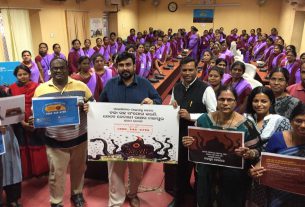
Bhubaneswar, October 30: A two-day consultation meeting-cum-workshop for successful implementation of PALNA scheme in the State.
The objective of the PALNA scheme is to provide quality crèche facility in safe and secure environment for children (from ages 6 months – 6 years), nutritional support, health and cognitive development of children, growth monitoring and immunisation. Crèche facilities under Palna are provided to all mothers, irrespective of their employment status.
The workshop is being organised by the Women and Child Development Department in collaboration with the Indian Institute for Human Settlements (IIHS, Bangalore) and other technical experts in Early Childhood Care and Education (ECCE) and Maternal, Newborn and Child Health (MNCH) at Hotel Mayfair in Bhubaneswar.
Women and Child Developmen Secretary Shubha Sarma inaugurated the workshop. The workshop was attended by the Director, WCD Department; Additional Secretary, ECCE; Additional Secretary, ICDS; Additional Secretary, Child Welfare; Additional Secretary, Women Empowerment Advocacy; Additional Secretary, Training and Coordination; Additional Secretary, MAMTA and Deputy Secretary.
The consultation brought together representatives from all districts of the state, including District Social Welfare Officers (DSWOs), Child Development Project Officers (CDPOs), Programme Officers, Supervisors, and Anganwadi Workers, as well as experts from Mobile Creches (MC) and the Society for Applied Sciences (SAS).
The primary objective of the workshop was to initiate the development of a Standard Operating Procedure (SOP) for the implementation of the PALNA Scheme in Odisha.
The consultation represents a crucial step towards designing an integrated framework that aligns with the existing PALNA guideline of Government of India, while addressing Odisha’s specific contextual needs.
The PALNA Scheme aims to promote and support women’s participation in the workforce by providing access to safe, reliable, and nurturing childcare facilities. It envisions the establishment of model PALNA centres, to ensure that children receive quality care and stimulation in their early years, thereby empowering mothers to engage meaningfully in economic and professional activities.
The key objectives of the consultation workshop included developing a pragmatic model PALNA Crèches center for the state of Odisha and preparing a detailed Action Plan for the formulation of the Model SOP.
“The PALNA initiative plays an integral role in this effort by ensuring that working mothers have access to safe, reliable, and nurturing childcare facilities. Nearly 85 percent of a child’s brain development occurs within the first 1,000 days of life,” said W& CD Secretary Subha Sharma.